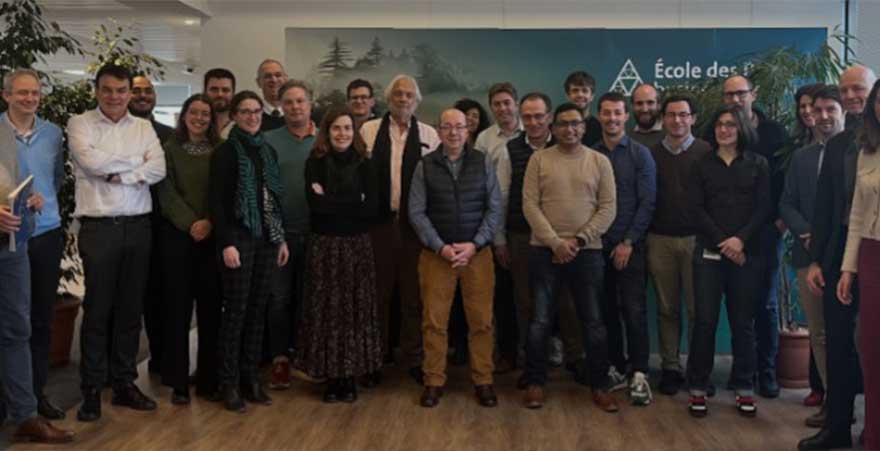
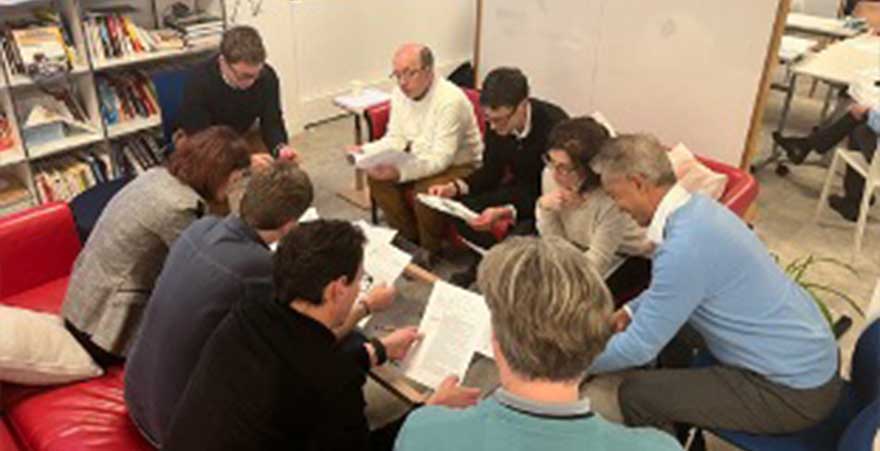
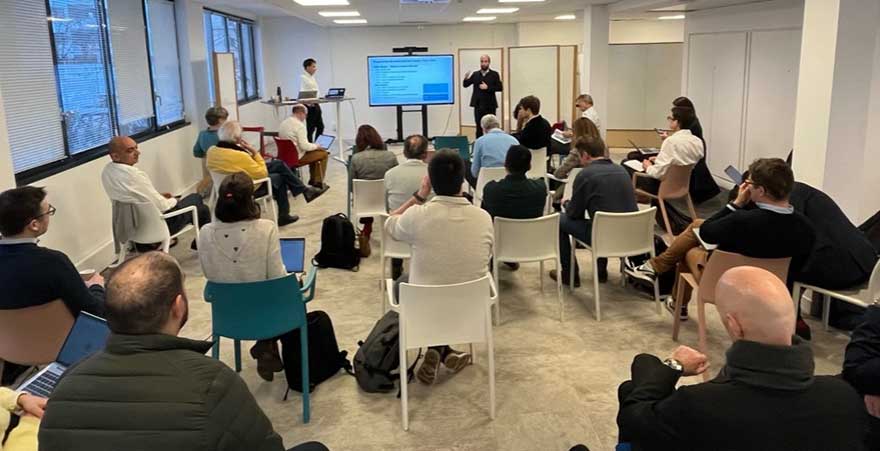
The "Production Planning" seminar of the Chair was held in January 2025 over two days and brought together around forty participants to address the new challenges of industrial planning. Designed as a laboratory of ideas, it combined feedback, intersectoral sharing and collaborative workshops to bring out concrete levers of action for industrial supply chains.
A 100% action-oriented seminar
For the first time, the Chair dedicated a seminar to "Production Planning", with a focus on planning methods and tools (APS, DDMRP, MRP, etc.) in increasingly complex industrial environments. Argon&Co's teams led interactive sessions combining strategic framing, concrete cases and peer-to-peer exchanges, with the contribution of Sanofi, Airbus and OPmobility.
These two days also laid the foundations for a collaborative white paper, intended to widely share the lessons learned and good practices from the members of the Chair.
Why planning is under pressure
At the heart of the discussions: the triangle of sustainable performance – cost, quality, deadlines, sustainability – put to the test by the diversity of products, the coexistence of several planning models and the pressure on capacities. Participants showed how these factors have a direct impact on the reliability of forecasts, inventory management and the exploitation of industrial resources.
The discussions also highlighted the effects of recent crises: risks of wrong priorities, increased pressure on teams, difficulties in reconciling short-term emergencies and long-term strategic vision.
What has changed in terms of business
The seminar highlighted several strong trends:
- Giving power back to planners, by rebalancing the roles between local sites and central functions to gain responsiveness.
- Strengthen the quality of information, by working both on data (reliability, speed of transmission) and on human skills (pedagogy, transparency).
- Extend the scope of "Production Planning" to external constraints: availability of components, supplier capacities, management of the extended supply chain.
- Accelerate the transition to "data-driven" professions, where data control and governance become an essential foundation.
Tools, AI and innovative solutions
The discussions showed that the optimization of ERP and planning systems remains a major lever for better modeling activities and aligning all stakeholders around a single data repository. Innovative approaches such as DDMRP or No Chain Planning® are being tested to overcome the limitations of traditional systems and better synchronize customer priorities.
Artificial intelligence appears to be a potential accelerator for exploiting unstructured data, refining forecasts and making supplies more reliable, even if its adoption is still cautious in many organizations.
And now ?
Several structuring projects are emerging for the future: strengthening the resilience of supply chains in the face of crises, integrating decarbonization at the heart of planning choices and supporting academic research in a field that is still very empirical.
A white paper will soon extend this seminar by making accessible, beyond the members of the Chair, the main lessons learned and courses of action identified.
Read all about the Supply Chain of the Future Chair in the press